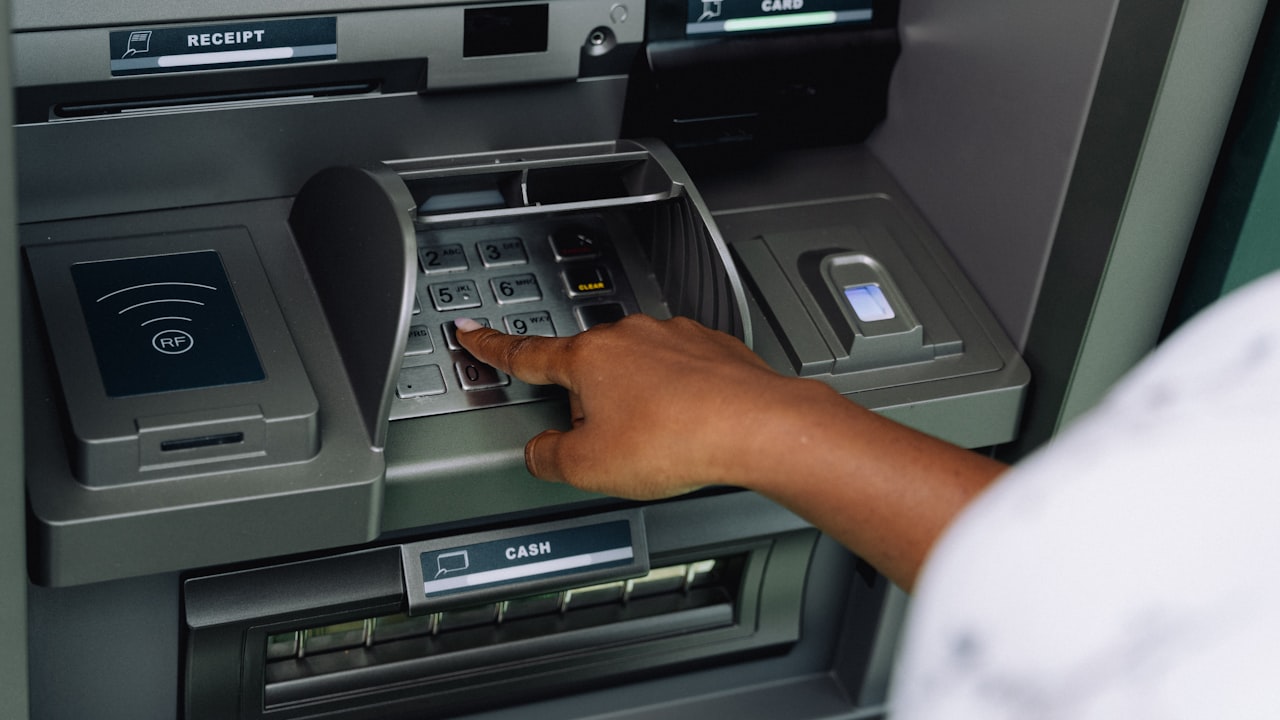
How Crypto Cards Work at ATMs
Crypto cards function like regular debit cards at ATMs. When you insert your card and request cash, the system instantly converts your crypto balance into fiat currency, then dispenses it. The entire process takes seconds—there’s no blockchain confirmation needed at the ATM itself.
Signal: The card issuer handles the conversion on the backend. You see your balance decrease and USD/EUR/GBP increase in your wallet.
Most crypto cards, including ether.fi Cash, work at any ATM that accepts Visa or Mastercard. That’s hundreds of thousands of ATMs globally.
One catch: every ATM withdrawal incurs a 2% fee on top of any FX charges. So a $100 withdrawal costs $2 just for the ATM. Plan larger, less-frequent withdrawals if you want to minimize costs.
Do Crypto Cards Work Internationally?
Yes—crypto cards work in any country where the card network (Visa/Mastercard) is accepted. But “working” and “being available” are different things.
The ether.fi Cash card ships to 76+ countries and works in 150+ transaction regions. However, 20 countries are prohibited—including Russia, China, India, Philippines, Turkey, and Venezuela. 21 US states are also restricted.
When you spend internationally with a crypto card, your balance is converted to that country’s local currency. Here’s where FX fees matter:
Key metric: On USD and EUR, crypto cards typically charge 0% FX fee. On other currencies, expect 1% FX. So a £100 purchase from the US incurs the 1% fee, adding £1.
Risk: Some cards report that international use is possible, but the issuer may block transactions if your account wasn’t verified in that country. Always test a small transaction first.
ATM Fees & FX Costs Explained
Let’s break down what you actually pay when you withdraw cash internationally with a crypto card.
ATM fee: 2% (on ether.fi Cash and most competitors). Non-negotiable—it’s the card issuer’s fee.
FX conversion fee: Depends on the currency pair. If the card offers 0% FX on USD/EUR, withdrawing in those currencies costs only the 2% ATM fee. Withdrawing in JPY, INR, or MXN? Add 1% on top.
Example: $100 ATM withdrawal in Tokyo (JPY):
- ATM fee: $2
- FX fee: $1 (1% of $100)
- Total cost: $3 (3% of withdrawal)
Always withdraw in USD or EUR if your card supports it—you’ll save the FX fee entirely.
Do Crypto Cards Report to IRS? Tax & Compliance
This is a critical question that many crypto-card users overlook.
Short answer: Yes, crypto transactions can be taxable events. The IRS treats crypto-to-fiat conversions (like ATM withdrawals) as potential sales or exchanges, which may trigger capital gains tax.
When you withdraw $100 in cash from a crypto card, here’s what the IRS sees:
- Taxable event: You converted crypto to fiat. If the crypto appreciated, you owe capital gains tax on the difference.
- Reporting: Card issuers may report your transactions via 1099 forms or similar disclosures, depending on your jurisdiction and transaction volume.
- Threshold: The IRS doesn’t require specific 1099 filing for transactions under certain thresholds (currently $20,000 and 200+ transactions per year for payment processors, though rules are evolving).
Risk: Ignoring crypto-tax reporting can result in penalties, interest, and audits. Many people assume small ATM withdrawals don’t count—they do.
Why it matters: Even a $50 ATM withdrawal is a taxable event if your crypto cost basis is lower than the withdrawal amount. If you bought $1 of ETH and later withdrew it at $1.50, you owe capital gains tax on the $0.50 gain.
What to do:
- Keep detailed records of every ATM withdrawal (date, amount, crypto asset, price at time of withdrawal).
- Consult a tax professional in your country.
- Use tax software designed for crypto (CoinTracker, Koinly, etc.) to track basis and calculate gains.
For countries outside the US, rules vary widely. The UK has different reporting requirements than Canada. EU users fall under MiCA regulations. Don’t assume US rules apply to you.
Which Crypto Cards Work Where?
Not all crypto cards are available globally. Here’s the breakdown:
ether.fi Cash works in 76+ countries (for card shipment) and 150+ transaction regions (for spending). It’s one of the most widely available non-custodial cards. Restrictions apply to 20 countries and 21 US states.
Alternatives if ether.fi isn’t available:
- Crypto.com: Available in 150+ countries but more custodial (they hold your crypto).
- Bybit: Up to 80+ countries but US-restricted.
- RedotPay: Largest non-custodial card globally, works in 140+ countries.
Signal: If you’re in a restricted jurisdiction, you’ll need a custodial alternative. Non-custodial cards (which let you hold your own crypto) have narrower availability due to regulatory hurdles.
The availability gap has narrowed since 2023. As MiCA (Markets in Crypto-Assets Regulation) rolled out across the EU, more cards expanded into Europe. By 2026, most major cards now cover 100+ countries.
Check your specific country and state before signing up. Rules change quarterly as new jurisdictions adopt crypto-friendly regulations or tighten restrictions.
How to Maximize ATM Usage & Minimize Fees
Here are practical strategies to use your crypto card at ATMs efficiently:
Withdraw in bulk, not frequently. Each ATM transaction costs 2%. Three $100 withdrawals cost $6 total. One $300 withdrawal costs $6 also—but you’ve minimized transactions.
Prefer USD/EUR ATMs when traveling. You avoid the 1% FX fee entirely. If you’re in London but your card charges 1% FX on GBP, find a EUR ATM instead (if available).
Use ATMs from major networks. Some ATMs charge additional fees on top of the card issuer’s 2%. A small-town ATM in rural Thailand might charge $2 local fee + 2% card fee. Use bank ATMs or major networks (7-Eleven, HSBC, etc.) when possible.
Spend directly when you can. ATM withdrawals incur fees, but point-of-sale purchases often don’t (or have lower fees). Use your card directly at restaurants, shops, and online instead of pulling cash.
Track conversions for tax purposes. Record the date, amount, and exchange rate of every ATM withdrawal. This is essential for tax reporting.