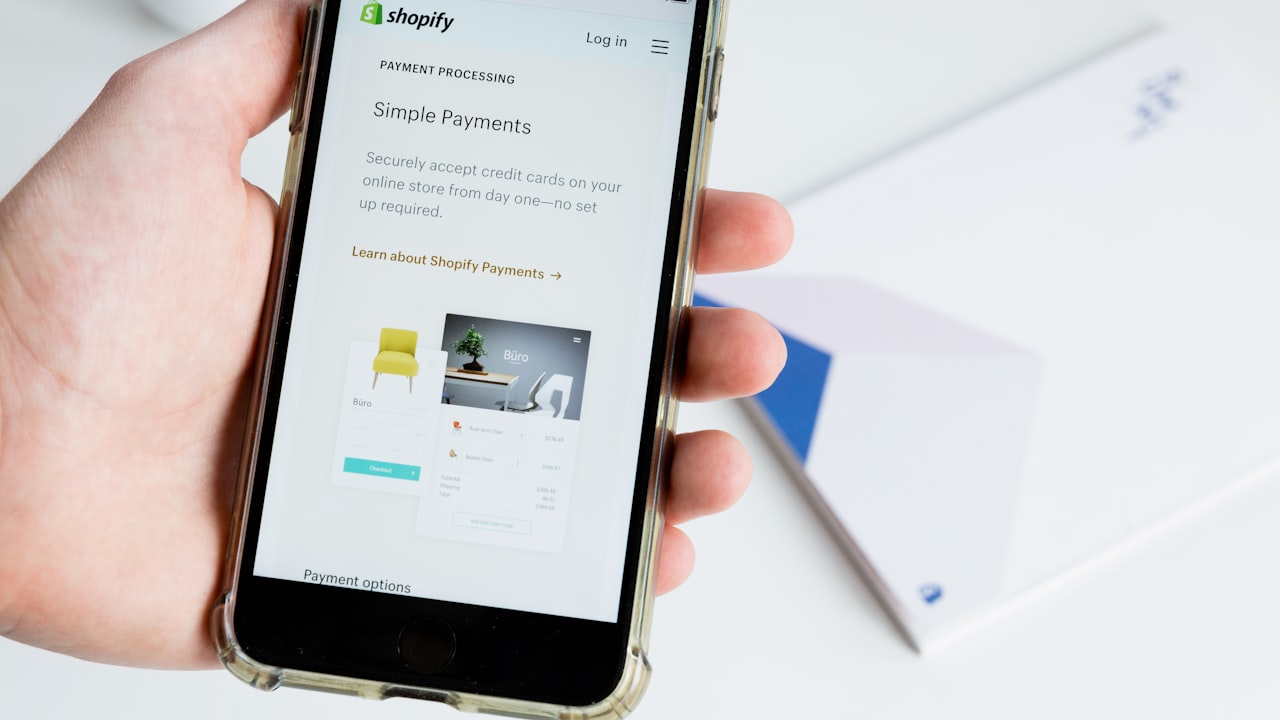
Why Shopify Merchants Need a Crypto Card
Running a Shopify store means constant spending: inventory, advertising, shipping supplies, software subscriptions. Every transaction in USD, EUR, or other fiat currencies is an opportunity cost if you’re already holding crypto. With a traditional business card, those dollars disappear into a bank account earning zero—or negative after fees. A crypto card for Shopify merchants flips this: your business expenses earn cashback, your crypto stays staked and earning APY, and you bypass bank intermediaries entirely.
Key metric: The ether.fi Cash card yields up to 3 % cashback on all transactions with zero FX fees on USD/EUR. For a $100,000/year Shopify business, that’s $3,000 in annual rewards—paid in stablecoin or your chosen asset, never locked in a card issuer’s wallet.
Signal: If you’re processing $5,000+ per month in Shopify expenses, a crypto card for Shopify merchants saves $150/month minimum (at 3% cashback). For merchants scaling from Core tier ($2,000/month limit) to Luxe ($10,000/month), the card grows with you—no credit requalification needed.
Inventory Purchasing Power
Inventory is Shopify’s biggest line item. Whether you’re sourcing from Alibaba, US wholesalers, or EU manufacturers, a crypto card for Shopify merchants handles FX cleanly. ether.fi Card charges zero FX on USD/EUR and only 1 % on all other currencies. A single €10,000 EU supplier payment incurs no FX penalty—you keep the 3 % cashback and skip the 2–4 % markup typical bank cards charge.
Risk: You must maintain sufficient ETH or stablecoin balance on the card. Spending limits reset monthly: Core $2,000, Luxe $10,000, Pinnacle $50,000. Plan your cashflow around tier limits, not the other way around.
Why it matters: Traditional merchant cards (Square, Stripe, PayPal) pocket the FX margin you’d capture with a crypto card for Shopify merchants. Over a year of international sourcing, that margin compounds: processing €50,000 in EU purchases saves ~€2,000 in FX fees alone. Add 3 % cashback, and you’re looking at five-figure annual savings on mid-size ecommerce operations.
Advertising & Software Subscriptions
Ads are non-negotiable: Facebook, Google Ads, TikTok Shop, email marketing (ConvertKit, Klaviyo). These are recurring, often in foreign currencies—especially for global campaigns. A crypto card for Shopify merchants excels here because FX rates are locked at execution time, with no bank chargeback lag or hold delays.
Signal: $500/month in ad spend = ~$15/month in eliminated FX fees + $15/month in cashback = $360/year on ads alone. Multiply across 5–10 vendors, and you’re looking at a five-figure annual saving on mid-size operations.
Payment reconciliation is also cleaner: all transactions appear in your wallet’s history with real-time settlement. Accounting software like QuickBooks can ingest the CSV export; no 3–5-day settlement delays like traditional processors.
Why it matters: CFOs of mid-sized Shopify stores demand treasurer-grade accounting. A crypto card for Shopify merchants gives instant transaction clarity, transparent fee structures (no hidden network markups), and wallet-based reporting that audit software understands immediately.
Why Content Creators & YouTubers Use Crypto Cards
Content creators operate in a different payment ecosystem. YouTube monetization, TikTok Shop revenue, Patreon subscriptions, affiliate payouts—most flow to your bank account with cross-border friction. A US YouTuber earning from an EU platform faces wire fees, currency slippage, and multi-day settlement.
A crypto card for content creators solves this by letting you earn in crypto natively, then spend it anywhere without bank intermediaries. Better still: if you’re staking crypto (Ethereum, Lido liquid-stake tokens), you earn yield while spending, doubling your rewards.
Key metric: YouTubers staking ETH earn 5–8 % APY. Layer in the 3 % cashback from a crypto card for creators, and you’re compounding two yield sources simultaneously—staking + cashback, totaling ~8 % blended returns.
Dual-Yield Stacking for Creators
This is the crypto-card moat traditional finance cannot match. A YouTuber earning ETH, staking it for 5–6 % APY, and spending via a crypto card for creators earning 3 % cashback ends up with ~8 % blended annual returns just from holding business income. Compare that to a traditional YouTube Creator Fund payout (bank account earning 0 % APY) and you’re leaving 8 % on the table every year.
Signal: A content creator earning $10,000/month ($120,000/year) in crypto revenue and staking + spending via a crypto card for YouTubers keeps an extra $3,000–$5,000/year in compounded rewards—a 3–5 % income uplift that would normally require a financial advisor.
Affiliate marketing networks (Amazon Associates, ShareASale, Awin) increasingly offer crypto payouts. A creator who routes affiliate income into a staking vault and spends via a crypto card for content creators compounds earnings without touching a bank or tax-penalty conversion service.
Risk: You must maintain ETH or stablecoin reserves. If your card hits the monthly spending cap (Luxe tier = $10,000/month), you cannot transact until the next month. Plan for tier upgrades as your channel grows—surprises are costly.
Why it matters: Staking removes the friction of “waiting for YouTube to pay me”; it turns your holdings into passive income that grows daily. Combining that with a crypto card for creators means every Shopify purchase, hotel booking, or software subscription becomes another cashback event.
Tier Strategy: Core → Luxe as Your Business Scales
Most Shopify merchants and creators start on Core tier ($2,000/month spend limit, $40 one-time refundable deposit). As you scale, you graduate to Luxe ($10,000/month) and Pinnacle ($50,000/month). No requalification—your tier upgrades automatically based on 30-day spend history.
Signal: A crypto card for Shopify merchants running $5,000+ monthly should upgrade to Luxe immediately—the extra $8,000/month capacity is free, just one signature away in-app.
Physical Card & Shipping Strategy
Core tier ships your physical card in 15+ business days. Pinnacle tier expedites to 1–3 days. For merchants or creators who travel or need backup payment methods, Pinnacle’s speed is a competitive advantage—especially if you’re managing inventory across multiple countries.
Watch: ether.fi periodically offers tier-unlock bonuses (e.g., free Pinnacle upgrade for 90 days if you hit $15,000 in monthly spend). Monitor in-app notifications; these promos shift thresholds and are worth timing upgrades around.
Why it matters: Scaling from Core to Luxe costs nothing except a few clicks. If you’re consistently above $3,000/month, the mental overhead of staying under Core limits is not worth the $40 savings. Upgrade and free up your treasury for other purposes.
What to Watch
- Spending cap hits: If you run a high-volume Shopify store, track your 30-day rolling spend and request a tier upgrade before you hit the limit. Declined transactions damage customer relationships and revenue.
- KYC revalidation: ether.fi may request updated ID, liveness check, or proof of address every 12–24 months. Plan compliance into your accounting calendar to avoid account freezes.
- Staking APY fluctuations: If you’re staking to fund your card, monitor Ethereum beacon-chain rewards. Annual yields vary 2–8 % depending on network conditions; don’t plan your budget assuming peak-year APY.
- Regulatory expansion into prohibited regions: ether.fi will eventually serve Finland, Hungary, Netherlands, and other EU countries. If you’re in an unsupported jurisdiction, check the help center quarterly for updates—early adopters in newly enabled regions often get promotional bonuses.
- Promo rate changes: ether.fi rotates cashback rates (current: 3 % standard). A rate cut to 1 % would reduce annual rewards from $1,500 to $500 on a $50,000 operation—monitor in-app announcements and plan accordingly.
Bottom Line
-
If you fit the high-volume Shopify merchant profile ($5,000+/month expenses, international sourcing, recurring ad spend), a crypto card for Shopify merchants saves 3–5 % in FX fees and cashback alone—a five-figure annual advantage for mid-sized stores.
-
If you’re a YouTuber or content creator earning crypto, the dual-yield stacking (staking APY + cashback) turns your holdings into a compounding asset. A $100,000/year creator keeps an extra $3,000–$5,000/year in rewards.
-
The primary risk is tier-limit discipline. Core caps at $2,000/month. If your business exceeds that, upgrade to Luxe ($10,000) or Pinnacle ($50,000) proactively. Transaction declines are costly.
-
Get started now: Sign up via https://www.ether.fi/@defycard today. Your virtual card activates in minutes. Link it to your Shopify store, YouTube account, or affiliate processor, and start earning 3 % cashback on your next transaction.
FAQ
[{ “q”: “Do I need to verify my business to use a crypto card for Shopify merchants?”, “a”: “No. ether.fi Card only requires standard KYC: government ID, phone number, liveness selfie. You don’t upload business licenses, tax IDs, or merchant statements. This makes it simpler than Stripe Connect or Square for Merchants.” }, { “q”: “What happens if my Shopify revenue drops below $2,000/month?”, “a”: “You stay on Core tier with no downgrade penalty or account fee. If you fall below $500/month in spending, ether.fi may eventually close inactive accounts, but there’s a 6–12 month grace period. Keep your card active with one small monthly transaction to avoid closure.” }, { “q”: “Can I earn cashback on Shopify payout deposits to the card?”, “a”: “Yes—but only if you deposit Shopify payouts into an ether.fi wallet first, then spend from that wallet. Shopify’s native payout processor doesn’t integrate with ether.fi Card yet. Convert to stablecoin via a CEX, deposit to ether.fi, and spend.” }, { “q”: “Is the 3 % cashback guaranteed, or can it change?”, “a”: “Current cashback is 3 % plus rotating promos. These rates are subject to change at ether.fi’s discretion but have been stable since launch. Check ether.fi’s terms for the current rate before signup.” }, { “q”: “How does a crypto card for Shopify merchants compare to a traditional Stripe card?”, “a”: “Stripe: 1–2% cashback, 2–3% FX fees, 3–5 day settlement, Stripe owns transaction data. ether.fi: up to 3% cashback, 0% FX on USD/EUR, instant settlement, you own your data. Stripe handles chargebacks; ether.fi does not—you’re responsible for card security.” }, { “q”: “Can I withdraw crypto from a crypto card for YouTubers to my bank account?”, “a”: “No. ether.fi Card only lets you spend balance to Visa merchants. To convert to fiat, use a separate CEX account (Kraken, Coinbase, Gemini) to bridge crypto-to-bank.” }]
Risk & Disclosure
DefyCard publishes affiliate-linked reviews; we earn a commission when you sign up through our links at no extra cost to you. ether.fi Cash is a non-custodial card: you hold your own crypto keys, and the card issuer never holds your funds. This is safer than custodial cards like Crypto.com, but you are responsible for key backup and transaction security—lost seed phrases mean lost access. Cryptocurrency is volatile: ETH and stablecoin prices fluctuate daily. The 3 % cashback and staking APY are not guaranteed and may change. A crypto card for Shopify merchants is not available in Belarus, Bangladesh, China, Cuba, Estonia, Finland, Hungary, India, Iraq, Israel, Nepal, Netherlands, North Korea, Philippines, Russia, Syria, Turkey, Ukraine, Venezuela, Vietnam, or these 21 US states: Arizona, Delaware, Georgia, Idaho, Louisiana, Maryland, Mississippi, Missouri, Montana, Nevada, New Mexico, North Dakota, Ohio, Oregon, Rhode Island, South Dakota, Tennessee, Vermont, Washington, Wisconsin. Before opening an account, verify your jurisdiction is supported at https://help.ether.fi.